 Add to Chrome
 Add to Firefox
 Add to Edge
VideoFDB: Evaluating Full-Duplex Vision-Speech Capabilities in Conversational Agents
May 28, 2026
Natural human conversation is full-duplex and audio-visual: people simultaneously speak and listen while continuously interpreting and producing nonverbal cues, such as nods, smiles, and gestures. To support successful human-agent interaction, agents must model full-duplex audiovisual conversation; however, existing full-duplex benchmarks evaluate only speech. In this work, we present VideoFDB, the first benchmark to evaluate full-duplex audio-visual-to-audio-visual (AV2AV) conversational agents. VideoFDB contributes (i) 237 dyadic clips spanning 11 nonverbal conversational dynamics from real-world video calls, (ii) a taxonomy separating perception from generation behaviors, and (iii) a rubric-based LM-as-judge evaluation framework with interpretable axes for assessing conversational quality with respect to nonverbal conversational dynamics. Across open- and closed-source vision-speech agents, we find systematic failure modes: captioning collapse and visual-stream ignorance, and we show that current systems exploit vision for explicit visual question answering but not for the streaming joint audiovisual grounding required in natural conversation. We further evaluate cascaded speech-to-avatar systems and find that their architecture fundamentally precludes the production of full-duplex nonverbal cues. As the first benchmark for full-duplex AV2AV interaction, VideoFDB establishes a foundation for systematic evaluation and, we hope, will accelerate the advancement and development of next-generation multimodal conversational agents.

Findings of the Counter Turing Test: AI-Generated Image Detection
May 21, 2026The rapid advancements in generative AI technologies, such as Stable Diffusion, DALL-E, and Midjourney, have significantly transformed the creation of synthetic visual content. While these models enable innovation across industries, they also pose serious challenges, including misinformation, disinformation, and biased content generation. The increasing realism of AI-generated images makes their detection a pressing concern for researchers, policymakers, and industry stakeholders. In this paper, we present the findings of the Defactify 4.0 workshop, which introduced the Counter Turing Test (CT2) for AI-Generated Image Detection. The competition consisted of two key tasks: (1) binary classification of images as either AI-generated or real and (2) identification of the specific generative model responsible for an AI-generated image. To facilitate this, we developed the MS COCOAI dataset, consisting of 50,000 synthetic images from multiple generative models alongside real-world images from the MS COCO dataset. Participants employed diverse detection strategies, including convolutional neural networks (CNNs), Vision Transformers (ViTs), frequency-based analysis, contrastive learning, and multimodal techniques. The results demonstrated that while AI-generated images can be detected with high accuracy (F1-score > 0.83), identifying the exact model used remains significantly more challenging (highest F1-score: 0.4986). These findings highlight the need for improved model fingerprinting, adversarial robustness, and real-time detection mechanisms.
PrefixGuard: From LLM-Agent Traces to Online Failure-Warning Monitors
May 07, 2026Large language model (LLM) agents now execute long, tool-using tasks where final outcome checks can arrive too late for intervention. Online warning requires lightweight prefix monitors over heterogeneous traces, but hand-authored event schemas are brittle and deployment-time LLM judging is costly. We introduce PrefixGuard, a trace-to-monitor framework with an offline StepView induction step followed by supervised monitor training. StepView induces deterministic typed-step adapters from raw trace samples, and the monitor learns an event abstraction and prefix-risk scorer from terminal outcomes. Across WebArena, $τ^2$-Bench, SkillsBench, and TerminalBench, the strongest PrefixGuard monitors reach 0.900/0.710/0.533/0.557 AUPRC. Using the strongest backend within each representation, they improve over raw-text controls by an average of +0.137 AUPRC. LLM judges remain substantially weaker under the same prefix-warning protocol. We also derive an observability ceiling on score-based area under the precision-recall curve (AUPRC) that separates monitor error from failures lacking evidence in the observed prefix. For finite-state audit, post-hoc deterministic finite automaton (DFA) extraction remains compact on WebArena and $τ^2$-Bench (29 and 20 states) but expands to 151 and 187 states on SkillsBench and TerminalBench. Finally, first-alert diagnostics show that strong ranking does not imply deployment utility: WebArena ranks well yet fails to support low-false-alarm alerts, whereas $τ^2$-Bench and TerminalBench retain more actionable early alerts. Together, these results position PrefixGuard as a practical monitor-synthesis recipe with explicit diagnostics for when prefix warnings translate into actionable interventions.
About Time: Model-free Reinforcement Learning with Timed Reward Machines
Dec 19, 2025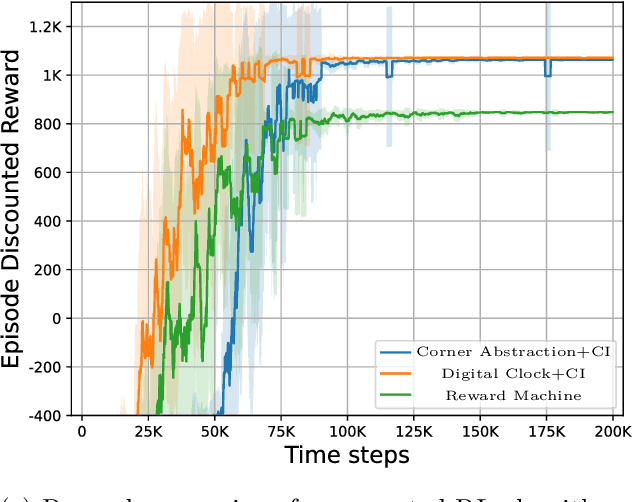
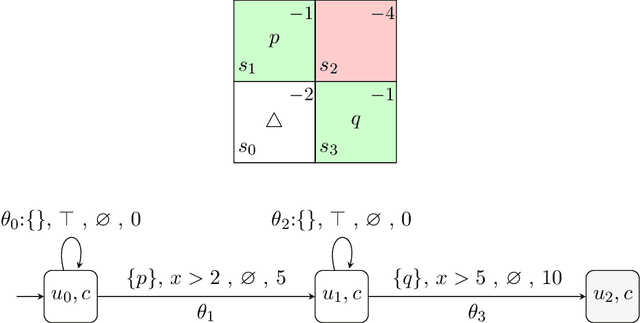
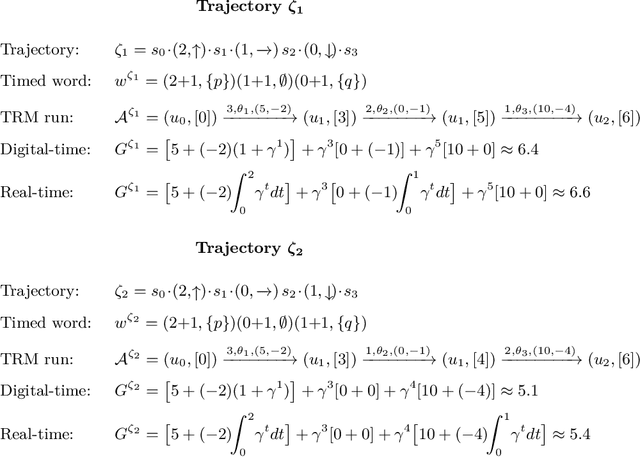
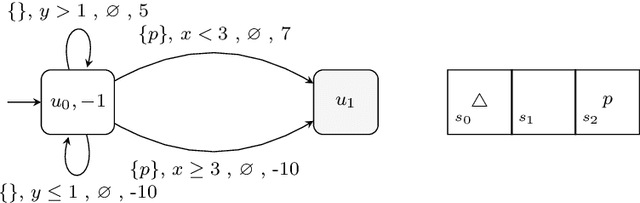
Reward specification plays a central role in reinforcement learning (RL), guiding the agent's behavior. To express non-Markovian rewards, formalisms such as reward machines have been introduced to capture dependencies on histories. However, traditional reward machines lack the ability to model precise timing constraints, limiting their use in time-sensitive applications. In this paper, we propose timed reward machines (TRMs), which are an extension of reward machines that incorporate timing constraints into the reward structure. TRMs enable more expressive specifications with tunable reward logic, for example, imposing costs for delays and granting rewards for timely actions. We study model-free RL frameworks (i.e., tabular Q-learning) for learning optimal policies with TRMs under digital and real-time semantics. Our algorithms integrate the TRM into learning via abstractions of timed automata, and employ counterfactual-imagining heuristics that exploit the structure of the TRM to improve the search. Experimentally, we demonstrate that our algorithm learns policies that achieve high rewards while satisfying the timing constraints specified by the TRM on popular RL benchmarks. Moreover, we conduct comparative studies of performance under different TRM semantics, along with ablations that highlight the benefits of counterfactual-imagining.
A Comprehensive Dataset for Human vs. AI Generated Text Detection
Oct 26, 2025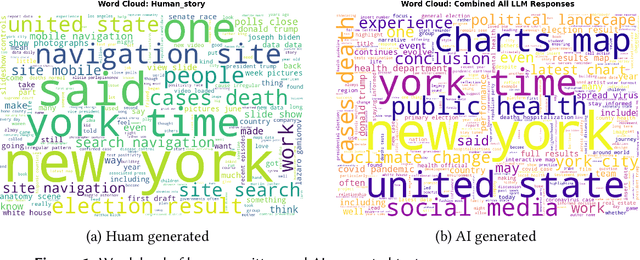
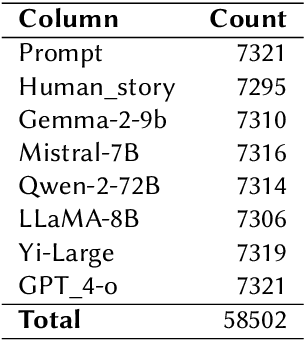
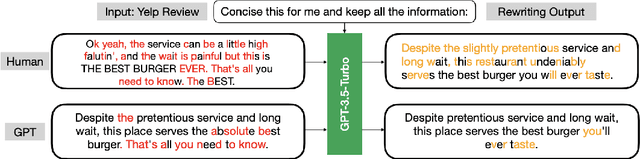

The rapid advancement of large language models (LLMs) has led to increasingly human-like AI-generated text, raising concerns about content authenticity, misinformation, and trustworthiness. Addressing the challenge of reliably detecting AI-generated text and attributing it to specific models requires large-scale, diverse, and well-annotated datasets. In this work, we present a comprehensive dataset comprising over 58,000 text samples that combine authentic New York Times articles with synthetic versions generated by multiple state-of-the-art LLMs including Gemma-2-9b, Mistral-7B, Qwen-2-72B, LLaMA-8B, Yi-Large, and GPT-4-o. The dataset provides original article abstracts as prompts, full human-authored narratives. We establish baseline results for two key tasks: distinguishing human-written from AI-generated text, achieving an accuracy of 58.35\%, and attributing AI texts to their generating models with an accuracy of 8.92\%. By bridging real-world journalistic content with modern generative models, the dataset aims to catalyze the development of robust detection and attribution methods, fostering trust and transparency in the era of generative AI. Our dataset is available at: https://huggingface.co/datasets/gsingh1-py/train.
DETONATE: A Benchmark for Text-to-Image Alignment and Kernelized Direct Preference Optimization
Jun 17, 2025Alignment is crucial for text-to-image (T2I) models to ensure that generated images faithfully capture user intent while maintaining safety and fairness. Direct Preference Optimization (DPO), prominent in large language models (LLMs), is extending its influence to T2I systems. This paper introduces DPO-Kernels for T2I models, a novel extension enhancing alignment across three dimensions: (i) Hybrid Loss, integrating embedding-based objectives with traditional probability-based loss for improved optimization; (ii) Kernelized Representations, employing Radial Basis Function (RBF), Polynomial, and Wavelet kernels for richer feature transformations and better separation between safe and unsafe inputs; and (iii) Divergence Selection, expanding beyond DPO's default Kullback-Leibler (KL) regularizer by incorporating Wasserstein and R'enyi divergences for enhanced stability and robustness. We introduce DETONATE, the first large-scale benchmark of its kind, comprising approximately 100K curated image pairs categorized as chosen and rejected. DETONATE encapsulates three axes of social bias and discrimination: Race, Gender, and Disability. Prompts are sourced from hate speech datasets, with images generated by leading T2I models including Stable Diffusion 3.5 Large, Stable Diffusion XL, and Midjourney. Additionally, we propose the Alignment Quality Index (AQI), a novel geometric measure quantifying latent-space separability of safe/unsafe image activations, revealing hidden vulnerabilities. Empirically, we demonstrate that DPO-Kernels maintain strong generalization bounds via Heavy-Tailed Self-Regularization (HT-SR). DETONATE and complete code are publicly released.
Learning Probabilistic Temporal Logic Specifications for Stochastic Systems
May 17, 2025There has been substantial progress in the inference of formal behavioural specifications from sample trajectories, for example, using Linear Temporal Logic (LTL). However, these techniques cannot handle specifications that correctly characterise systems with stochastic behaviour, which occur commonly in reinforcement learning and formal verification. We consider the passive learning problem of inferring a Boolean combination of probabilistic LTL (PLTL) formulas from a set of Markov chains, classified as either positive or negative. We propose a novel learning algorithm that infers concise PLTL specifications, leveraging grammar-based enumeration, search heuristics, probabilistic model checking and Boolean set-cover procedures. We demonstrate the effectiveness of our algorithm in two use cases: learning from policies induced by RL algorithms and learning from variants of a probabilistic model. In both cases, our method automatically and efficiently extracts PLTL specifications that succinctly characterise the temporal differences between the policies or model variants.
What is Formal Verification without Specifications? A Survey on mining LTL Specifications
Jan 27, 2025Virtually all verification techniques using formal methods rely on the availability of a formal specification, which describes the design requirements precisely. However, formulating specifications remains a manual task that is notoriously challenging and error-prone. To address this bottleneck in formal verification, recent research has thus focussed on automatically generating specifications for formal verification from examples of (desired and undesired) system behavior. In this survey, we list and compare recent advances in mining specifications in Linear Temporal Logic (LTL), the de facto standard specification language for reactive systems. Several approaches have been designed for learning LTL formulas, which address different aspects and settings of specification design. Moreover, the approaches rely on a diverse range of techniques such as constraint solving, neural network training, enumerative search, etc. We survey the current state-of-the-art techniques and compare them for the convenience of the formal methods practitioners.
DPO Kernels: A Semantically-Aware, Kernel-Enhanced, and Divergence-Rich Paradigm for Direct Preference Optimization
Jan 08, 2025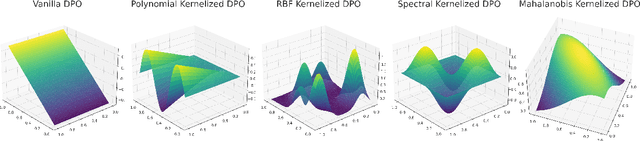
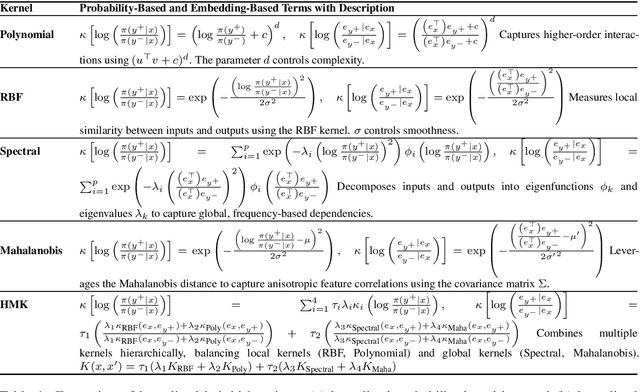
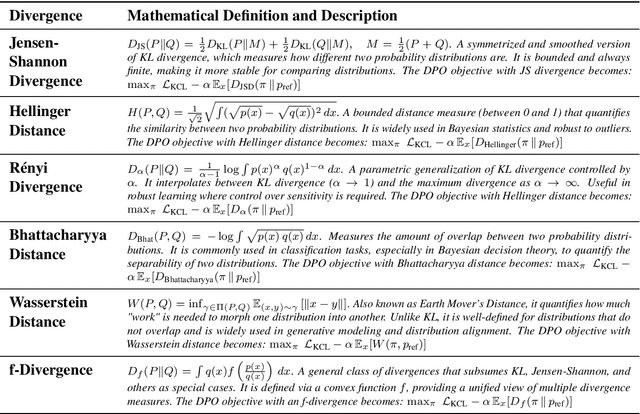
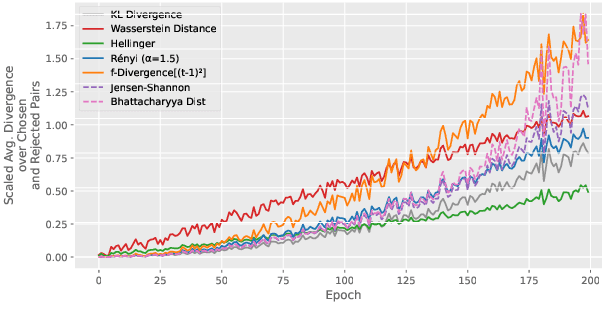
The rapid rise of large language models (LLMs) has unlocked many applications but also underscores the challenge of aligning them with diverse values and preferences. Direct Preference Optimization (DPO) is central to alignment but constrained by fixed divergences and limited feature transformations. We propose DPO-Kernels, which integrates kernel methods to address these issues through four key contributions: (i) Kernelized Representations with polynomial, RBF, Mahalanobis, and spectral kernels for richer transformations, plus a hybrid loss combining embedding-based and probability-based objectives; (ii) Divergence Alternatives (Jensen-Shannon, Hellinger, Renyi, Bhattacharyya, Wasserstein, and f-divergences) for greater stability; (iii) Data-Driven Selection metrics that automatically choose the best kernel-divergence pair; and (iv) a Hierarchical Mixture of Kernels for both local precision and global modeling. Evaluations on 12 datasets demonstrate state-of-the-art performance in factuality, safety, reasoning, and instruction following. Grounded in Heavy-Tailed Self-Regularization, DPO-Kernels maintains robust generalization for LLMs, offering a comprehensive resource for further alignment research.
Nemotron-4 340B Technical Report
Jun 17, 2024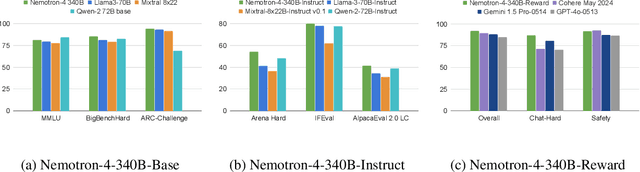

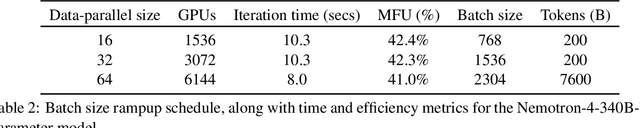
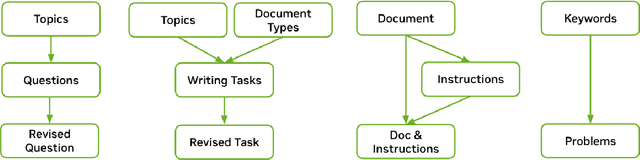
We release the Nemotron-4 340B model family, including Nemotron-4-340B-Base, Nemotron-4-340B-Instruct, and Nemotron-4-340B-Reward. Our models are open access under the NVIDIA Open Model License Agreement, a permissive model license that allows distribution, modification, and use of the models and its outputs. These models perform competitively to open access models on a wide range of evaluation benchmarks, and were sized to fit on a single DGX H100 with 8 GPUs when deployed in FP8 precision. We believe that the community can benefit from these models in various research studies and commercial applications, especially for generating synthetic data to train smaller language models. Notably, over 98% of data used in our model alignment process is synthetically generated, showcasing the effectiveness of these models in generating synthetic data. To further support open research and facilitate model development, we are also open-sourcing the synthetic data generation pipeline used in our model alignment process.